
Torque ConverterConvert between newton-meters, foot-pounds, inch-pounds, and kilogram-force meters.
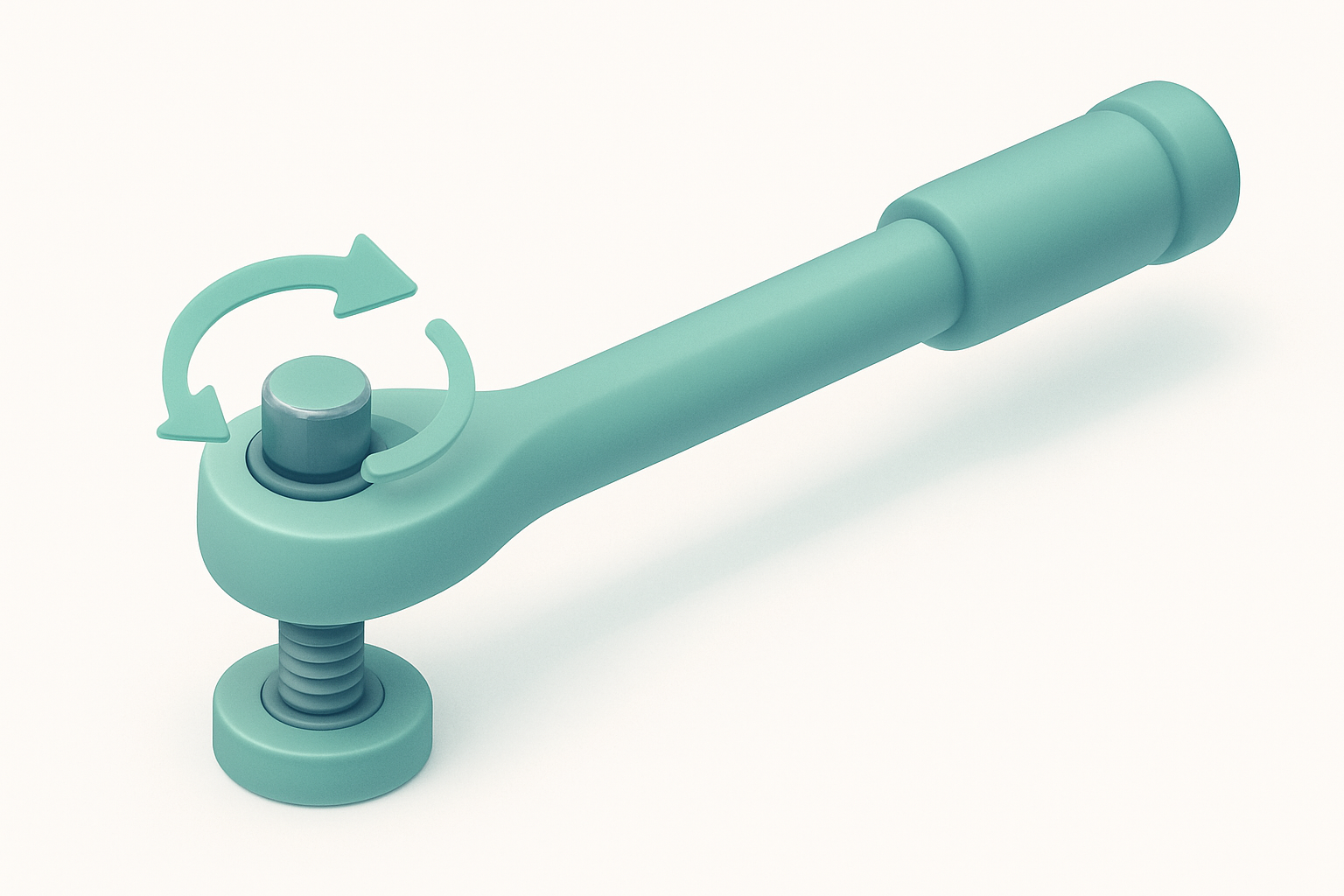

Torque Converter
Convert between newton-meters, foot-pounds, inch-pounds, and kilogram-force meters.
Enter torque
Type the torque value to convert.
Select units
Choose source and target torque units.
View the result
Converted torque appears instantly.
What Is Torque Converter?
A torque converter translates between units of rotational force. Torque (or moment of force) measures the tendency of a force to rotate an object around an axis. The newton-meter (N·m) is the SI unit. Foot-pounds (ft·lb) and inch-pounds (in·lb) are standard in the US for automotive and mechanical specifications. Kilogram-force meters (kgf·m) are still used in some European and Asian contexts. Proper torque conversion is critical for correctly tightening bolts, comparing engine specifications, and mechanical design.
Why Use Our Torque Converter?
- Covers the four most-used torque units.
- Essential for automotive work and mechanical engineering.
- Prevents over- or under-tightening bolts when following specs from different systems.
- Real-time bidirectional conversion.
Common Use Cases
Automotive
Convert engine torque specs and bolt torque values between N·m and ft·lb.
Bicycle Maintenance
Convert component torque specs, often given in N·m, to inch-pounds for smaller fasteners.
Mechanical Engineering
Convert torque specifications across international standards.
Manufacturing
Set torque wrenches correctly regardless of the specification's unit system.
Technical Guide
Torque = force × lever arm length. The SI unit is the newton-meter (N·m). • 1 N·m = 1 newton applied at 1 meter from the pivot • 1 ft·lb = 1.35582 N·m • 1 in·lb = 0.112985 N·m = 1/12 ft·lb • 1 kgf·m = 9.80665 N·m Automotive context: Engine torque is typically rated in N·m (metric) or ft·lb (imperial). A common sedan might produce 200 N·m (148 ft·lb) while a sports car might produce 500+ N·m. Bolt torque specs in service manuals are critical for safety — always convert accurately when your torque wrench uses different units than the specification.
Tips & Best Practices
- 1Quick estimate: 1 N·m ≈ 0.738 ft·lb. Multiply N·m by 0.74 for a rough ft·lb value.
- 21 ft·lb = 12 in·lb exactly.
- 3Always torque fasteners to spec — over-tightening can strip threads; under-tightening can lead to failure.
- 4Torque wrenches should be calibrated regularly for accuracy.
Related Tools
Force Converter
Convert between newtons, kilonewtons, pound-force, kilogram-force, dynes, and poundals.
 Unit Converters
Power Converter
Convert between watts, kilowatts, megawatts, horsepower, PS, BTU/h, and ft-lbf/s.
Unit Converters
Length Converter
Convert between millimeters, centimeters, meters, kilometers, inches, feet, yards, miles, and nautical miles instantly.
Unit Converters

Angle Converter
Convert between degrees, radians, gradians, arcminutes, arcseconds, and turns.
Unit Converters

Weight Converter
Convert between milligrams, grams, kilograms, ounces, pounds, metric tons, and stones in real time.
Unit Converters
Temperature Converter
Convert between Celsius, Fahrenheit, Kelvin, and Rankine temperature scales with real-time results.
Unit ConvertersFrequently Asked Questions
QHow do I convert N·m to ft·lb?
QHow many inch-pounds in a foot-pound?
QWhat torque do car lug nuts need?
QIs torque the same as work/energy?
QWhat is kgf·m?
About Torque Converter
Torque Converter is a free online tool from FreeToolkit.ai. All processing happens directly in your browser — your data never leaves your device. No registration required. No ads. Just fast, reliable tools.