
Base64 Image EncoderConvert images to Base64-encoded data URIs for embedding in HTML and CSS.

Base64 Image Encoder
Convert images to Base64-encoded data URIs for embedding in HTML and CSS.
Upload Image
Select or drag and drop an image file (PNG, JPG, GIF, SVG, WebP).
View Base64 Output
The Base64 data URI is generated instantly.
Copy Data URI
Click Copy to copy the full data URI for use in HTML or CSS.
What Is Base64 Image Encoder?
A Base64 Image Encoder converts image files into Base64-encoded data URIs that can be embedded directly in HTML, CSS, or JavaScript. Instead of referencing an external file, the image data is inline as a data:image/type;base64,... string. This eliminates extra HTTP requests and is ideal for small icons, logos, and sprites. The tool reads the image using the FileReader API, detects the MIME type automatically, and produces a complete data URI. Supports PNG, JPEG, GIF, SVG, WebP, and other common formats. All processing happens in your browser — images never leave your device.
Why Use Our Base64 Image Encoder?
- Eliminate extra HTTP requests by inlining small images
- Automatic MIME type detection for all common image formats
- 100% client-side — images never leave your browser
- Generates ready-to-use data URIs for HTML and CSS
Common Use Cases
HTML Embedding
Embed small icons and logos directly in HTML img src attributes.
CSS Backgrounds
Use data URIs in CSS background-image properties.
Email Templates
Inline images in HTML emails to avoid blocked external resources.
Single-File Apps
Bundle images directly into JavaScript for offline-capable applications.
Technical Guide
The FileReader API reads the selected image as an ArrayBuffer, then converts it to a Base64 string via readAsDataURL(). The resulting data URI follows the format data:[MIME];base64,[encoded-data]. MIME type is auto-detected from the file. Base64 encoding increases data size by approximately 33%, so this technique is most efficient for images under 10KB. For larger images, external file references with proper caching are more performant.
Tips & Best Practices
- 1Best for small images under 10KB to avoid bloating HTML/CSS file size
- 2Use for icons, logos, and UI sprites that need to load instantly
- 3Data URIs are not cached separately — they're part of the HTML/CSS file
- 4SVG images can also be URL-encoded instead of Base64 for smaller size
Related Tools
Base64 Image Decoder
Decode Base64 data URIs back to viewable and downloadable images.
 Encoding & Crypto

Base64 Encode
Encode text to Base64 format instantly in your browser.
Encoding & Crypto
Base64 Decode
Decode Base64-encoded strings back to plain text instantly.
Encoding & Crypto
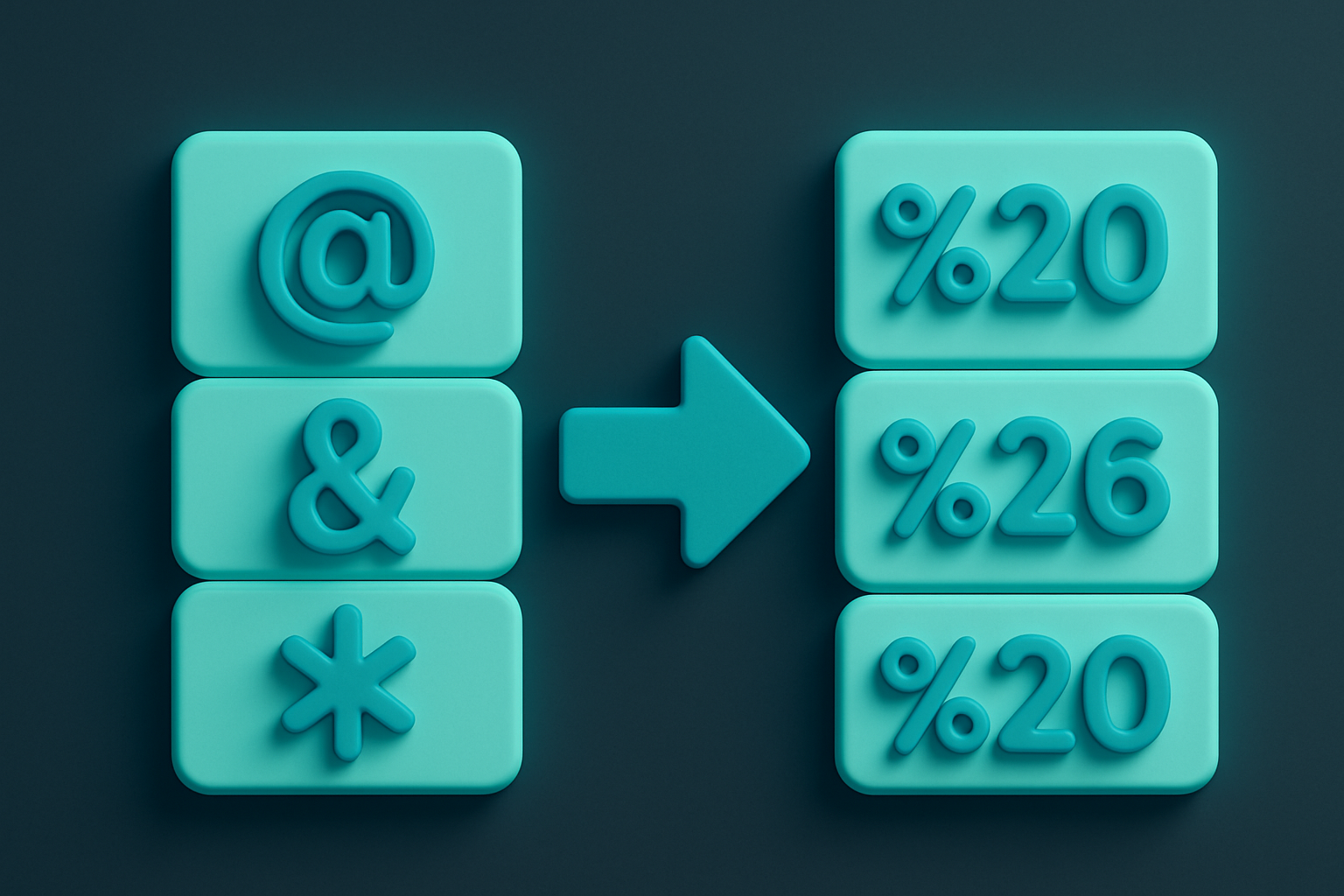
URL Encode (Full)
Percent-encode all special characters in a URL string.
Encoding & Crypto

Base32 Encode
Encode text to Base32 format using the RFC 4648 standard alphabet.
Encoding & Crypto
Base32 Decode
Decode Base32-encoded strings back to plain text.
Encoding & CryptoFrequently Asked Questions
QIs this tool free?
QAre my images uploaded to a server?
QWhat image formats are supported?
QIs there a file size limit?
QCan I use the output in CSS?
About Base64 Image Encoder
Base64 Image Encoder is a free online tool from FreeToolkit.ai. All processing happens directly in your browser — your data never leaves your device. No registration required. No ads. Just fast, reliable tools.