JSON to JSON LinesConvert a JSON array into JSON Lines (JSONL) format — one object per line.


JSON to JSON Lines
Convert a JSON array into JSON Lines (JSONL) format — one object per line.
Paste JSON array
Paste a JSON array into the input field.
View JSONL output
Each array element appears as a compact JSON line.
Copy or download
Copy the JSONL output for use in data pipelines.
What Is JSON to JSON Lines?
JSON to JSON Lines converts a standard JSON array into JSON Lines (JSONL/NDJSON) format. In JSON Lines, each line is a complete, compact JSON value with no pretty-printing. This format is ideal for streaming data, log files, and processing large datasets line-by-line. Each element of the input array becomes one line in the output, serialized as compact JSON (no whitespace or indentation).
Why Use Our JSON to JSON Lines?
- Simple, fast conversion from JSON arrays to line-delimited format.
- Compact output with no whitespace — ideal for streaming and logs.
- Each line is independently parseable — perfect for parallel processing.
- Standard JSONL/NDJSON format used by many data tools.
Common Use Cases
Data Streaming
Convert JSON arrays to JSONL for streaming through Kafka, Kinesis, or similar systems.
BigQuery Import
Generate JSONL format required by Google BigQuery for data loading.
Log Generation
Create structured log entries in JSONL format from JSON data.
Large Dataset Processing
Convert large JSON arrays to line-delimited format for memory-efficient processing.
Technical Guide
The conversion is straightforward: the JSON input is parsed, validated as an array, and each element is serialized to a compact JSON string using JSON.stringify() without indentation. Elements are joined with newline characters. This produces standard JSON Lines format where each line is a complete, valid JSON value. The format is sometimes called NDJSON (Newline-Delimited JSON) or JSON-seq. The key advantage of JSONL over regular JSON arrays: each line can be parsed independently, enabling line-by-line processing, parallel parsing, and streaming without loading the entire file into memory.
Tips & Best Practices
- 1Input must be a JSON array. Single objects are not valid input.
- 2Each output line is compact JSON with no whitespace or indentation.
- 3JSONL format is required by BigQuery, many logging systems, and data streaming tools.
- 4Lines can be processed independently — ideal for parallel and streaming workloads.
Related Tools

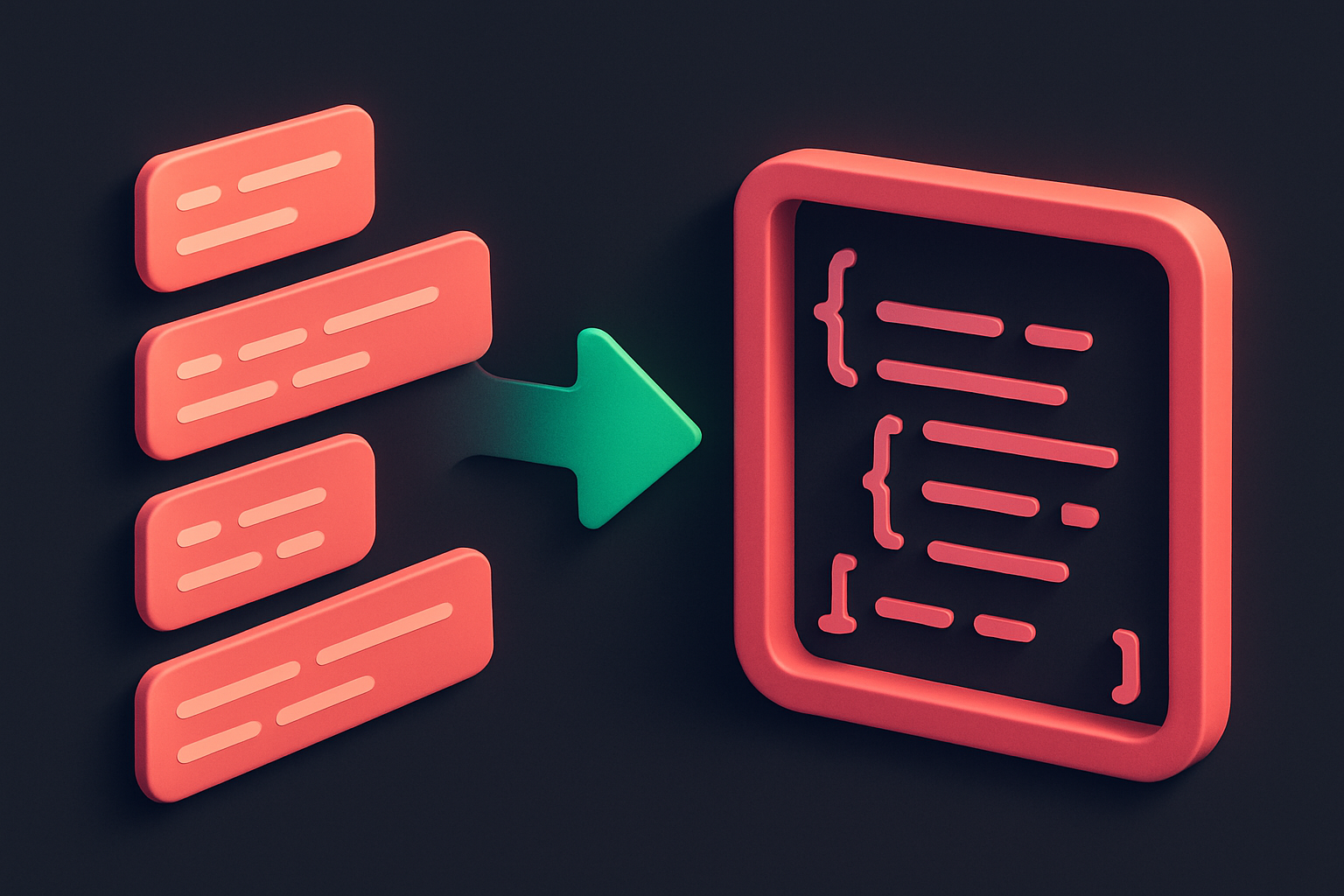
JSON Lines to JSON
Convert JSON Lines (JSONL) format back to a standard JSON array.
 File Conversion

JSON Lines Viewer
View JSONL (JSON Lines) data as a formatted, sortable table.
File Conversion

JSON to CSV
Convert JSON arrays to CSV format with proper escaping and formatting.
File Conversion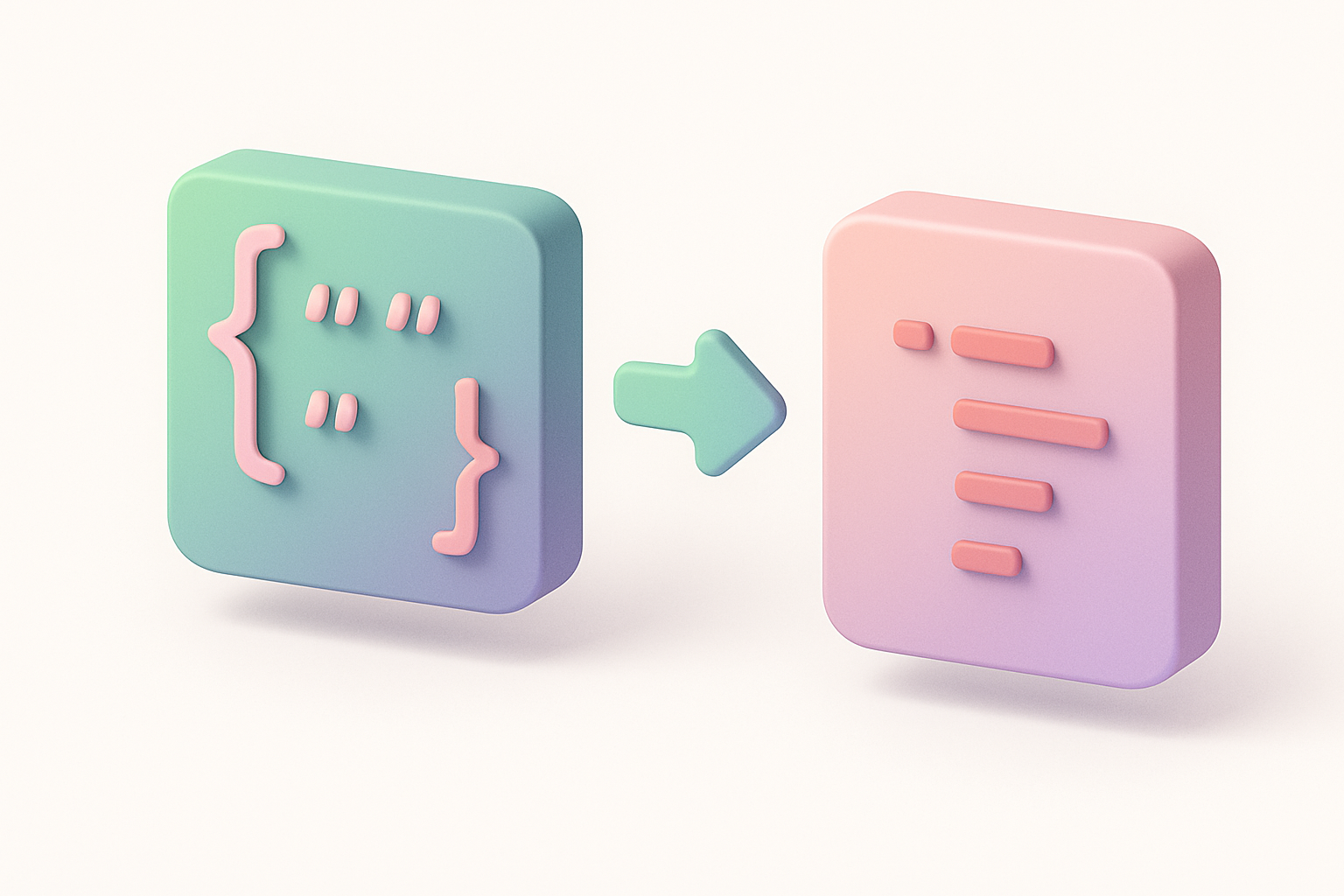

JSON to YAML
Convert JSON to clean, readable YAML format using the js-yaml library.
File Conversion
CSV to JSON
Convert CSV data to JSON array format instantly in your browser.
File Conversion

CSV to XML
Convert CSV data to well-formed XML with customizable root and row tags.
File ConversionFrequently Asked Questions
QWhat is JSON Lines?
QIs JSONL the same as NDJSON?
QWhy use JSONL instead of regular JSON?
QCan I convert back to a JSON array?
QDoes each line need to be an object?
About JSON to JSON Lines
JSON to JSON Lines is a free online tool from FreeToolkit.ai. All processing happens directly in your browser — your data never leaves your device. No registration required. No ads. Just fast, reliable tools.