
Dog Age CalculatorConvert dog years to human years using size-adjusted calculations based on AKC guidelines.
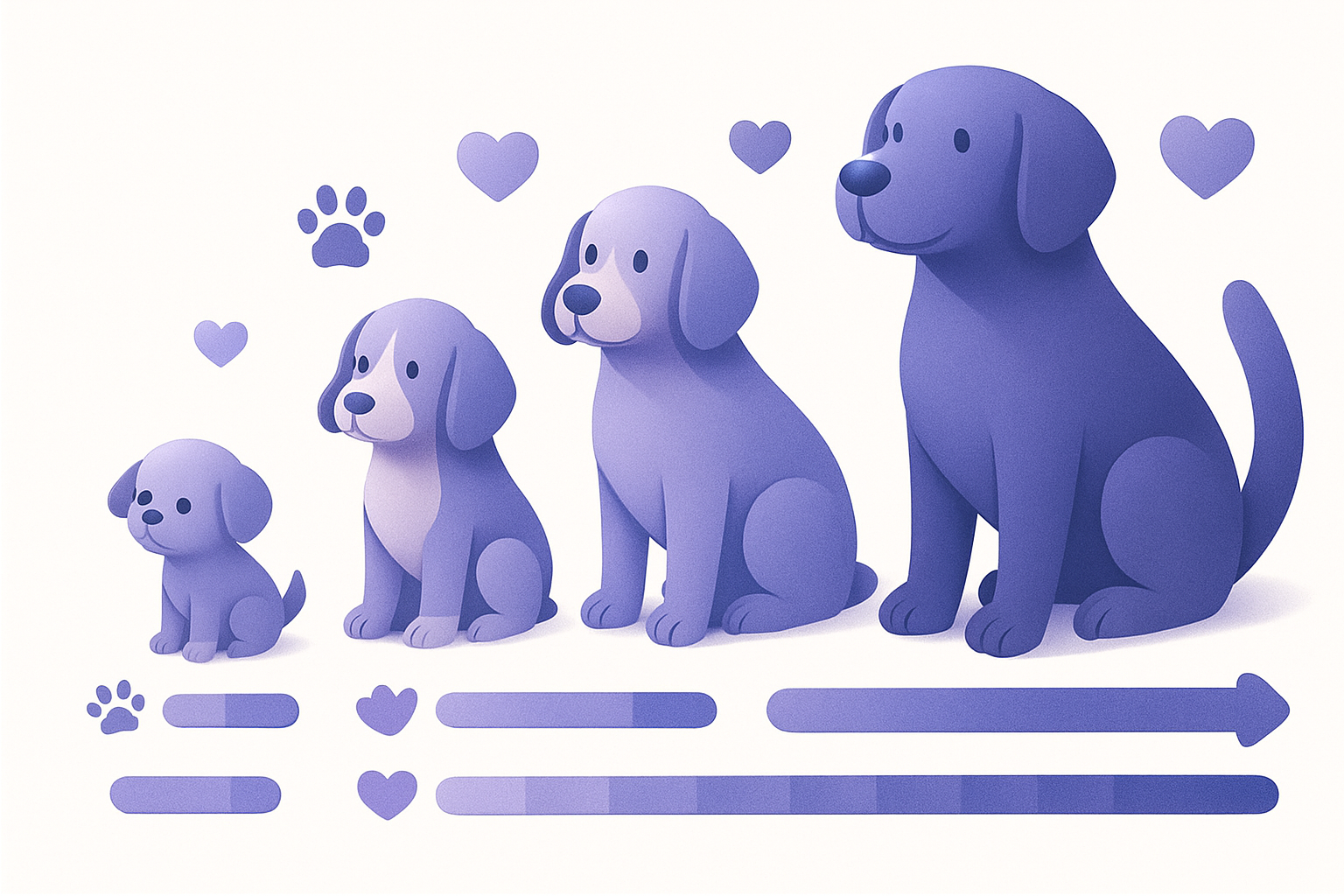

Dog Age Calculator
Convert dog years to human years using size-adjusted calculations based on AKC guidelines.
Enter Dog Age
Input your dog's age in years (decimals for months).
Select Size
Choose small, medium, large, or giant based on your dog's weight.
View Human Age
See the equivalent human age and life stage.
What Is Dog Age Calculator?
The Dog Age Calculator converts your dog's age into human-equivalent years using a size-adjusted formula based on AKC (American Kennel Club) guidelines. The old "multiply by 7" rule is inaccurate because dogs age much faster in their first two years and the rate varies significantly by size. Small dogs (under 20 lbs) tend to live longer and age more slowly, while giant breeds (over 100 lbs) age the fastest. The calculator shows both the size-adjusted human age and the simple ×7 estimate for comparison, plus your dog's current life stage (puppy, junior, adult, mature, or senior).
Why Use Our Dog Age Calculator?
- Size-adjusted calculations more accurate than the simple ×7 rule
- Based on AKC guidelines for dog aging
- Shows life stage classification (puppy through senior)
- Compares adjusted age with simple ×7 estimate
Common Use Cases
Health Planning
Understand your dog's life stage for appropriate veterinary care.
Diet Adjustment
Adjust nutrition based on whether your dog is a puppy, adult, or senior.
Exercise Planning
Tailor activity levels to your dog's equivalent human age.
Fun & Curiosity
Satisfy curiosity about your dog's human-equivalent age.
Technical Guide
Dogs age rapidly in their first two years — a 1-year-old dog is roughly equivalent to a 15-year-old human. By age 2, dogs are approximately 24 in human years. After that, each additional year adds 4-7 human years depending on size: Small dogs (<20 lbs): +4 years per dog year after age 2. Medium dogs (20-50 lbs): +5 years. Large dogs (50-100 lbs): +6 years. Giant dogs (>100 lbs): +7 years. This reflects the observed relationship between body size and lifespan — larger dogs tend to have shorter lifespans and faster aging rates. Life stages: Puppy (0-6 mo), Junior (6-24 mo), Adult (2-7 yr), Mature (7-10 yr), Senior (10+ yr).
Tips & Best Practices
- 1The "multiply by 7" rule is a myth — dogs age much faster in their first 2 years
- 2Large and giant breeds become seniors earlier than small breeds
- 3Half-year increments can be entered (e.g., 3.5 years for 3 years 6 months)
- 4Regular veterinary check-ups become more important as dogs enter the mature stage
Related Tools

Age Calculator
Calculate your exact age in years, months, days, and more from your birthdate.
 Date & Time
BMI Calculator
Calculate your Body Mass Index based on height and weight with metric and imperial units.
 Math & Calculators

Pregnancy Due Date Calculator
Calculate estimated due date from last period, conception date, or IVF transfer with progress tracking.
Math & Calculators

Calorie Calculator
Calculate daily calorie needs with macro breakdown for weight loss, maintenance, or muscle gain.
Math & Calculators
Percentage Calculator
Calculate percentages, percentage change, and what percent one number is of another.
Math & Calculators

Fraction Calculator
Add, subtract, multiply, and divide fractions with automatic simplification.
Math & CalculatorsFrequently Asked Questions
QIs the "7 years" rule accurate?
QWhy do small dogs live longer?
QWhen is a dog considered a senior?
QHow old is the oldest dog ever?
QDo mixed breeds age differently?
About Dog Age Calculator
Dog Age Calculator is a free online tool from FreeToolkit.ai. All processing happens directly in your browser — your data never leaves your device. No registration required. No ads. Just fast, reliable tools.